How to Read a Coffee Bag Like a Pro
Ever picked up a bag of coffee and thought, Cool… but what does this actually mean? You’re not alone. Coffee bags are filled with information, but once you know how to read them, they become a powerful guide to finding coffees you’ll truly love.
Let’s break down the three most important things to look for.
Tasting Notes: What They Actually Mean
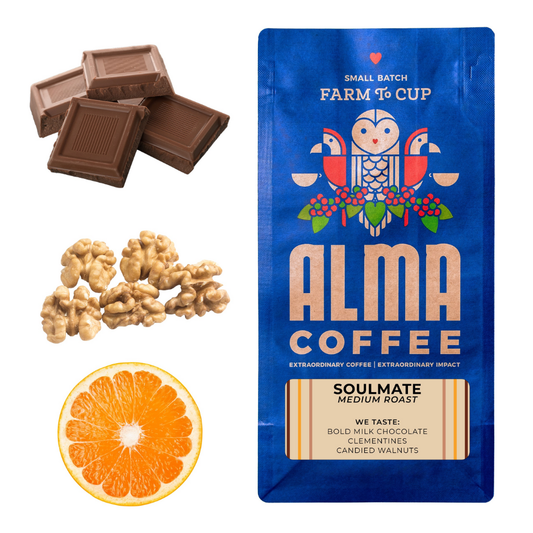
Those flavor notes listed on the bag are meant to describe what the coffee might remind you of, not what has been added to it. Coffee is a natural product, and its flavors develop through growing conditions, processing, and roasting.
When you see notes like chocolate, citrus, or honey, think of them as reference points for flavor and aroma. They help paint a picture of what you might experience in the cup.
It’s also important to remember that tasting notes are subjective. You don’t need to taste every note listed for the experience to be valid. If one flavor stands out to you, that’s a success. Tasting notes are simply a guide, not a test.
To help standardize how coffee professionals describe flavor, many use a coffee flavor wheel. This tool highlights common tasting notes and provides a shared language for describing coffee. Our roasting team uses it as a reference when evaluating coffees and deciding on the tasting notes you see on each bag.

Over time, using tasting notes as a guide can help you better understand your own preferences and discover new coffees you’ll enjoy.
Origin: Why Where Coffee Comes From Matters
Origin refers to where the coffee was grown, and it has a major influence on flavor. Just like wine, coffee reflects the environment it comes from.
In general:
- Coffees from Latin America tend to be balanced, smooth, and approachable
- Coffees from Africa are often brighter, fruit-forward, or floral
- Coffees from Asia are typically bolder, earthier, and more intense

Knowing the origin can help you make more intentional choices. Instead of guessing, you can select coffees based on flavor profiles you already know you enjoy. It’s also worth noting that transparency matters. When a coffee clearly lists its origin, it shows traceability and care throughout the entire process. Roasters who share this information are demonstrating a commitment to quality and respect for the producers behind the coffee.
Roast Date: The Most Important Detail to Check
If there’s one thing you should always look for on a coffee bag, it’s the roast date.
Freshly roasted coffee offers the best flavor. The roast date tells you exactly when the coffee was roasted, which gives you insight into its freshness. This is far more meaningful than a generic “best by” date.

Coffee is typically at its peak within a few weeks of roasting, when its flavors are most vibrant and expressive. A clearly listed roast date is a strong indicator that the roaster values freshness and quality.
Trust Your Taste
Once you understand tasting notes, origin, and roast date, reading a coffee bag becomes much less intimidating. But the most important factor is still you.
Your personal taste is what matters most. These details are there to guide you, not to dictate your experience. If you love what’s in your cup, then you chose well. Coffee is meant to be enjoyed, and the more you learn, the more rewarding that experience becomes.