


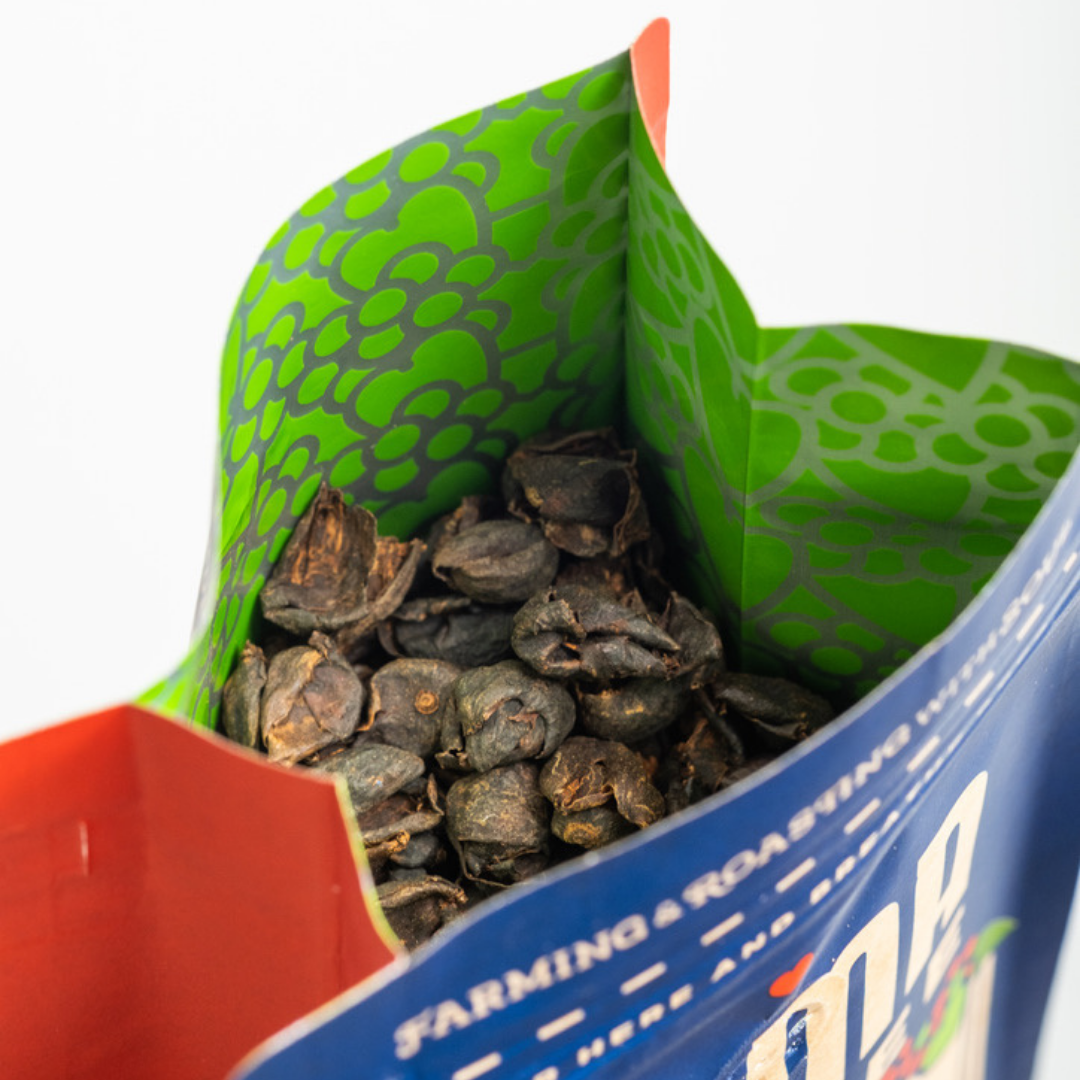
Cascara Tea
Couldn't load pickup availability
Meet one of coffee’s best-kept secrets: Cascara Tea
Made from the fruit of the coffee cherry rather than the seed, Cascara Tea offers a completely different experience from coffee. Vibrant, refreshing, and naturally sweet, this rare tea-like beverage features tasting notes of hibiscus, raspberry, and black tea with typically only about 30-40% of the caffeine of a traditional cup of coffee.
Crafted from carefully selected Pacas coffee cherries from Honduras, this cascara was produced using the same quality-focused approach we bring to every coffee we roast at Alma. Only cascara from our best cherries was selected for this lot, with additional sorting performed throughout the process to create an exceptionally clean and refined cup.
After harvest, the fruit skins are intentionally separated, washed, and slowly dried for five days on raised air beds. A dedicated team member carefully stirs the drying cascara every two hours to ensure even drying and preserve flavor clarity. Midway through drying, the cascara is manually sorted again for imperfections before being gently dehusked using specialized small-batch equipment designed specifically for cascara production.
The final cup is juicy, floral, and incredibly versatile whether enjoyed hot or over ice. It’s one of the most unique ways to experience the coffee plant and a product that is rarely exported in small specialty lots like this.
For brewing, we recommend preparing cascara similarly to tea. Add 50g of cascara to your brewer and pour 400ml of hot water over the fruit, stirring gently for about 20 seconds to fully saturate. Then add the remaining 350ml of water and allow it to steep for 3 minutes. If using a French press, wait until the full steep time before pressing. Enjoy it hot for a comforting tea-like cup or let it cool slightly before pouring over ice to preserve its natural sweetness and vibrant character.
Beyond flavor, cascara also reflects our commitment to sustainability. Any fruit not reserved for tea is returned to the farm as organic fertilizer, helping nourish future harvests and ensuring every part of the coffee cherry is used with purpose.
Because of the labor-intensive production process and limited availability, this release is extremely small and may not return once sold out.

